- Home |
- About |
- Contact Us |
- Privacy |
- Newsletter |
- Shop |
- Donate
Short Division vs Long Division
Support Page
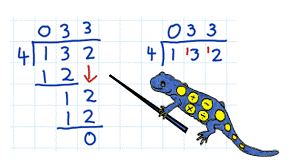
Welcome to the Short Division vs Long Division page.
If you are wondering what the difference is between short division and long division then this page is for you!
We have lots of examples and explain the similarities and differences between the two methods.
Get to learn both methods and make your own choice which to use!
There are also lots of worksheets with worked answer sheets to help practice and check each method.
Quicklinks to ...
Parts of a Long Division Equation

The dividend is the number being divided.
The divisor is the number you are dividing by.
The quotient is the number of times the divisor goes into the dividend.
The remainder is what is left over from the dividend when the divisor has been taken away as many times as it can be without leading to a negative answer.
The remainder can be a whole number, but it can also be expressed as a fraction or decimal.
The Steps in Long Division
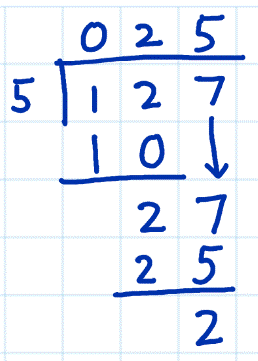
When we are doing long division, we can split the method into a series of stages with each stage having 4 steps:
Here are the 4 steps in each stage.
- Divide
- Multiply
- Subtract
- Bring the next number(s) down
We sometimes call this method the DMSB method of long division.
The Steps in Short Division
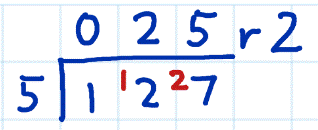
When we are doing short division, we can split the method into a series of stages with each stage having 3 steps:
Here are the 2 steps in each stage.
- Divide
- Multiply and Subtract
The main difference with short division is that we do the multiplication and subtraction part in our head and only need to record the answer part and the remainder.
Worked Examples showing Short Division vs Long Division
Here are some examples showing step by step long division and short division problems side by side to help you understand both methods.
Click on any example to see the full working out step-by-step.
Short Division vs Long Division
Example 1) 132 ÷ 4
Our first example shows a straightforward 3-digit dividend divided by a single digit with no remainder.
Long Division
We write out the division in the long division format.
Short Division
We write out the division in the short division format.
You will notice that they both have an identical set up.

Stage 1)
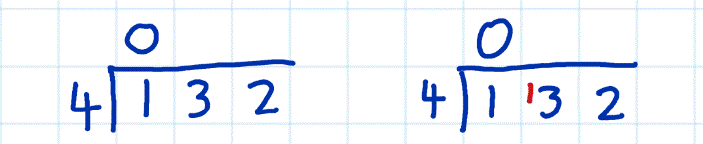
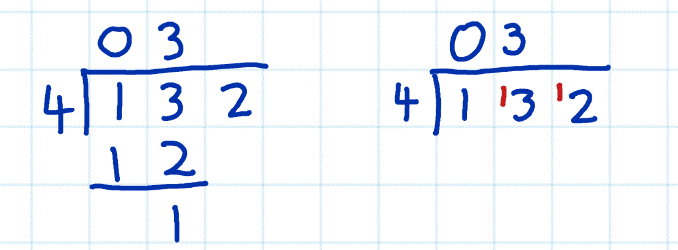
First step is to work out 1 ÷ 4, which means we need to find how many groups of 4 make 1.
There are 0 groups of 4 which make 1 so we write 0 above 1 in the answer line at the top.
Stage 1)
First step is to work out 1 ÷ 4, which means we need to find how many groups of 4 make 1.
There are 0 groups of 4 which make 1 so we write 0 above 1 in the answer line at the top.
We carry over the remainder, which is 1, into the next column. It is written in a small font slightly higher than the other numbers.
We have also written all the remainders which are carried over in red to see them more clearly (you can just write them in the same color if you wish).
Stage 2)
We now work out 13 ÷ 4 which means we need to find how many groups of 4 make 13
There are 3 groups of 4 which make 12.
We write the 3 above the number 3 in the answer line
We write 12 underneath the 13 and draw a line underneath it.
We work out 13 − 12 to give 1 which we write underneath the line.
Stage 2)
We now work out 13 ÷ 4 which means we need to find how many groups of 4 make 13
There are 3 groups of 4 which make 12.
We write the 3 above the number 3 in the answer line.
We work out 13 − 12 mentally and get 1 (which is the remainder).
We write the 1 in small letters to the left of the next number along.
Stage 3)
We bring down the next digit which is a 2.
We now work out 12 ÷ 4 which means we need to find how many groups of 4 make 12
There are 3 groups of 4 which make 12.
We write 3 in the answer line above the 2.
We write 12 underneath the 12 and draw a line underneath it.
We subtract 12 from 12 to give 0
There are no more digits to bring down so we have finished.
Stage 3)
We now work out 12 ÷ 4 which means we need to find how many groups of 4 make 12
There are 3 groups of 4 which make 12.
We write 3 in the answer line above the 2.
We subtract 12 from 12 mentally to give 0
There are no more digits to divide so we have finished .
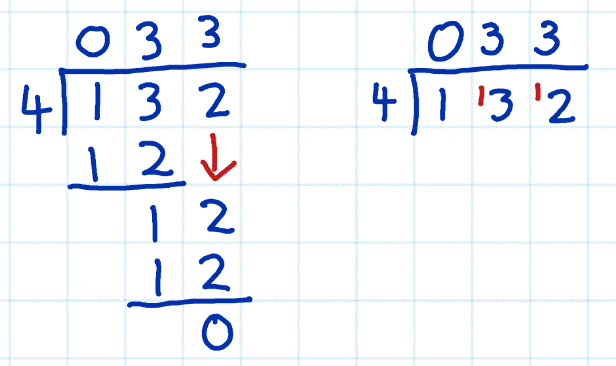
This gives us a final answer: 132 ÷ 4 = 33
Short Division vs Long Division
Example 2) 743 ÷ 3
Our second example shows a 3-digit dividend divided by a single digit with a remainder.
Long Division
Short Division

Stage 1)
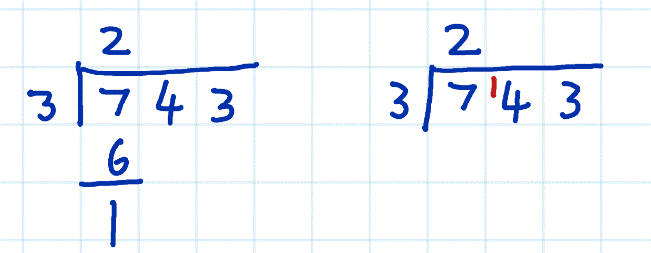
First step is to work out 7 ÷ 3, which means we need to find how many groups of 3 make 7.
There are 2 groups of 3 which make 6 so we write 2 above the 7 in the answer line at the top.
We write 6 under the 7 and draw a line underneath it.
We work out 7 − 6 = 1 and write this under the line.
Stage 1)
First step is to work out 7 ÷ 3, which means we need to find how many groups of 3 make 7.
There are 2 groups of 3 which make 6 so we write 2 above the 7 in the answer line at the top.
We work out 7 − 6 = 1 mentally and write 1 in small writing to the top left of the next digit.
Stage 2)
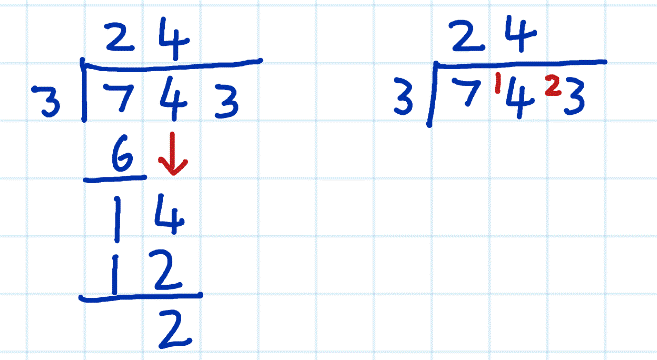
We now bring the next digit down which is a 4 and write it beside the 1 to make 14.
The next step is to work out 14 ÷ 3, which means we need to find how many groups of 3 make 14.
There are 4 groups of 3 which make 12 so we write 4 above the 4 in the answer line at the top.
We write 12 under the 14 and draw a line underneath it.
We work out 14 − 12 = 2 and write this under the line.
Stage 2)
The next step is to work out 14 ÷ 3, which means we need to find how many groups of 3 make 14.
There are 4 groups of 3 which make 12 so we write 4 above the 4 in the answer line at the top.
We work out 14 − 12 = 2 mentally and write 2 in small writing to the top left of the next digit.
Stage 3)
We now bring the next digit down which is a 3 and write it beside the 2 to make 23.
The next step is to work out 23 ÷ 3, which means we need to find how many groups of 3 make 23.
There are 7 groups of 3 which make 21 so we write 7 above the 3 in the answer line at the top.
We write 21 under the 23 and draw a line underneath it.
We work out 23 − 21 = 2 and write this under the line.
There are no more numbers to bring down so we have finished.
Stage 3)
The next step is to work out 23 ÷ 3, which means we need to find how many groups of 3 make 23.
There are 7 groups of 3 which make 21 so we write 7 above the 3 in the answer line at the top.
We work out 23 − 21 = 2 mentally.
There are no more digits to divide so we write the 2 as a remainder .
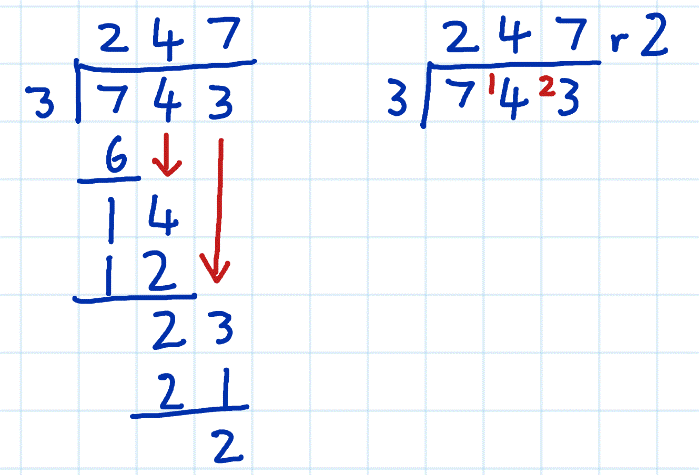
This gives us a final answer: 743 ÷ 3 = 247 remainder 2
Short Division vs Long Division
Example 3) Work out 4139 ÷ 5
Long Division
Short Division

Stage 1)
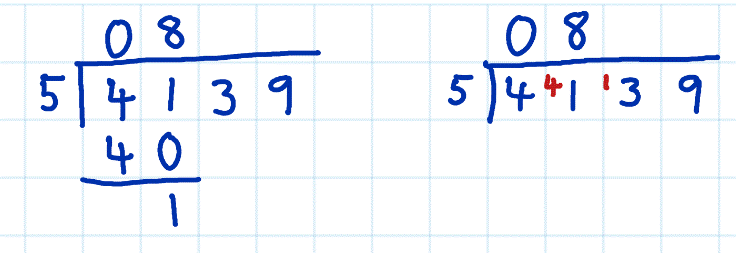
First step is to work out 4 ÷ 5, which means we need to find how many groups of 5 make 4.
There are 0 groups of 5 which make 4 so we write 0 above the 4 in the answer line at the top.
Stage 1)
First step is to work out 4 ÷ 5, which means we need to find how many groups of 5 make 4.
There are 0 groups of 5 which make 4 so we write 0 above the 4 in the answer line at the top.
There are 4 remainders so we write 4 in small writing to the top left of the next digit.

Stage 2)
The next step is to work out 41 ÷ 5, which means we need to find how many groups of 5 make 41.
There are 8 groups of 5 which make 40 so we write 8 above the 1 in the answer line at the top.
We write 40 underneath the 41 and underline it.
We work out 41 − 40 = 1 and write this below the line.
Stage 2)
The next step is to work out 41 ÷ 5, which means we need to find how many groups of 5 make 41.
There are 8 groups of 5 which make 40 so we write 8 above the 1 in the answer line at the top.
We work out 41 − 40 = 1 mentally and write 1 in small writing to the top left of the next digit.
Stage 3)
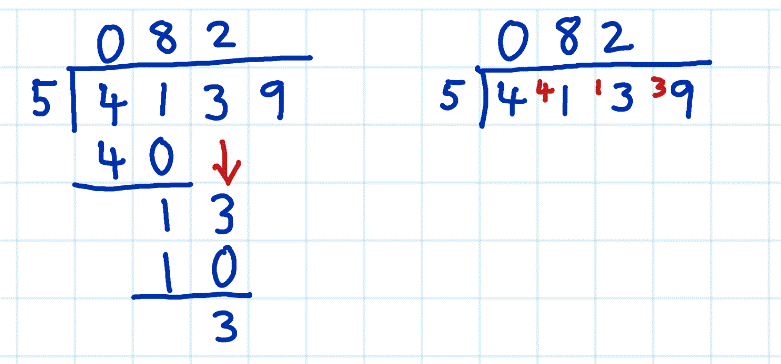
We bring down the next digit which is a 3 and write it beside the 1 to make 13.
The next step is to work out 13 ÷ 5, which means we need to find how many groups of 5 make 13.
There are 2 groups of 5 which make 10 so we write 2 above the 3 in the answer line at the top.
We write 10 underneath the 13 and underline it.
We work out 13 − 10 = 3 and write this below the line.
Stage 3)
The next step is to work out 13 ÷ 5, which means we need to find how many groups of 5 make 13.
There are 2 groups of 5 which make 10 so we write 2 above the 3 in the answer line at the top.
We work out 13 − 10 = 3 mentally and write the 3 in small writing to the top-left of the next digit.
Stage 4)
We bring down the next digit which is a 9 and write it beside the 3 to make 39.
The next step is to work out 39 ÷ 5, which means we need to find how many groups of 5 make 39.
There are 7 groups of 5 which make 35 so we write 7 above the 9 in the answer line at the top.
We write 35 underneath the 39 and underline it.
We work out 39 − 35 = 4 and write this below the line.
There are no more numbers to bring down so we have finished.
Stage 3)
The next step is to work out 39 ÷ 5, which means we need to find how many groups of 5 make 39.
There are 7 groups of 5 which make 35 so we write 7 above the 9 in the answer line at the top.
We work out 39 − 35 = 4 mentally.
There are no more digits to divide, so we write 4 as a remainder.
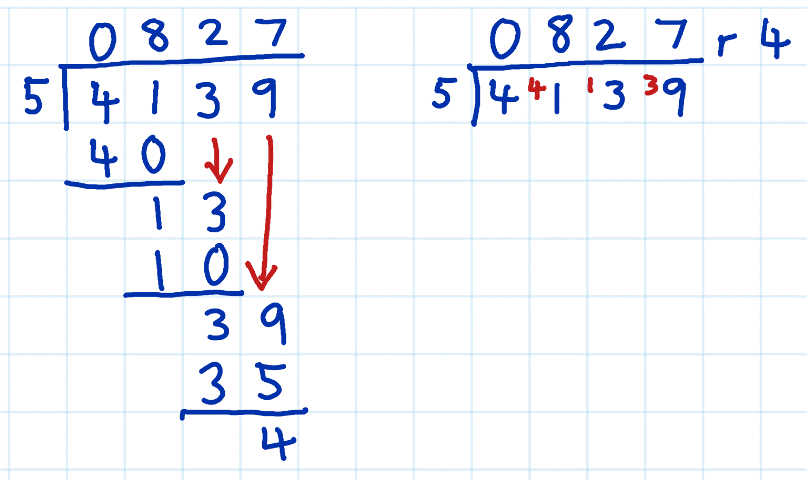
This gives us a final answer: 4129 ÷ 5 = 827 remainder 4
Short Division vs Long Division
Example 4) Work out 3892 ÷ 9
Long Division
Short Division

Stage 1)
First step is to work out 3 ÷ 9, which means we need to find how many groups of 9 make 3.
There are 0 groups of 9 which make 3 so we write 0 above the 3 in the answer line at the top.
Stage 1)
First step is to work out 3 ÷ 9, which means we need to find how many groups of 9 make 3.
There are 0 groups of 9 which make 3 so we write 0 above the 3 in the answer line at the top.
There is a remainder of 3 so we write 3 in small writing to the top left of the next digit.

Stage 2)
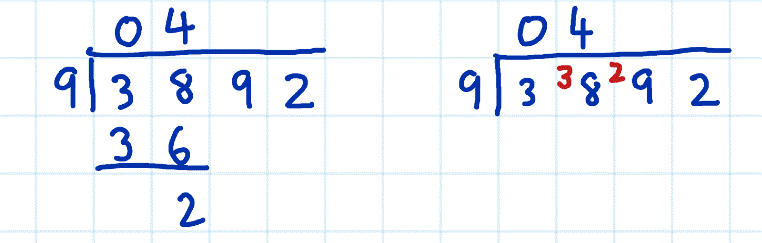
The next step is to work out 38 ÷ 9, which means we need to find how many groups of 9 make 38.
There are 4 groups of 9 which make 36 so we write 4 above the 8 in the answer line at the top.
We write 36 underneath the 38 and underline it.
We work out 38 − 36 = 2 and write this below the line.
Stage 2)
The next step is to work out 38 ÷ 9, which means we need to find how many groups of 9 make 38.
There are 4 groups of 9 which make 36 so we write 4 above the 8 in the answer line at the top.
We work out 38 − 36 = 2 mentally and write the remainder 2 in small writing at the top-left of the next digit.
Stage 3)
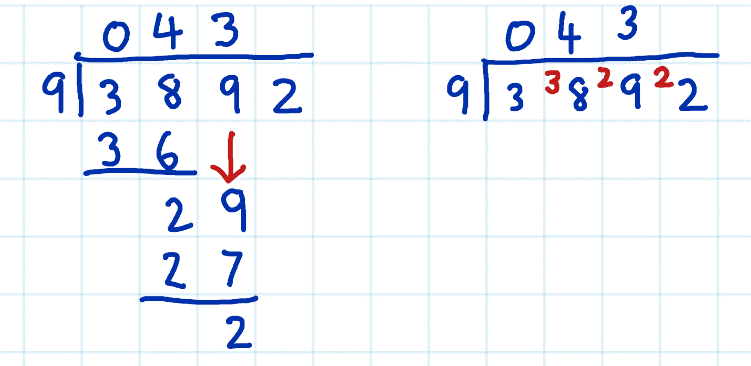
We bring down the next digit which is 9 and write it next to the 2.
The next step is to work out 29 ÷ 9, which means we need to find how many groups of 9 make 29.
There are 3 groups of 9 which make 27 so we write 3 above the 9 in the answer line at the top.
We write 27 underneath the 29 and underline it.
We work out 29 − 27 = 2 and write this below the line.
Stage 3)
The next step is to work out 29 ÷ 9, which means we need to find how many groups of 9 make 29.
There are 3 groups of 9 which make 27 so we write 3 above the 9 in the answer line at the top.
We work out 29 − 27 = 2 mentally and write this in small writing at the top-left of the next digit.
Stage 4)
We bring down the last digit which is 2 and write it next to the other 2.
The next step is to work out 22 ÷ 9, which means we need to find how many groups of 9 make 22.
There are 2 groups of 9 which make 18 so we write 2 above the 2 in the answer line at the top.
We write 18 underneath the 22 and underline it.
We work out 22 − 18 = 4 and write this below the line.
There are no other digits to bring down so we have finished.
Stage 3)
The next step is to work out 22 ÷ 9, which means we need to find how many groups of 9 make 22.
There are 2 groups of 9 which make 18 so we write 2 above the 2 in the answer line at the top.
We work out 22 − 18 = 4 mentally.
There are no other digits left so we have a remainder of 4.
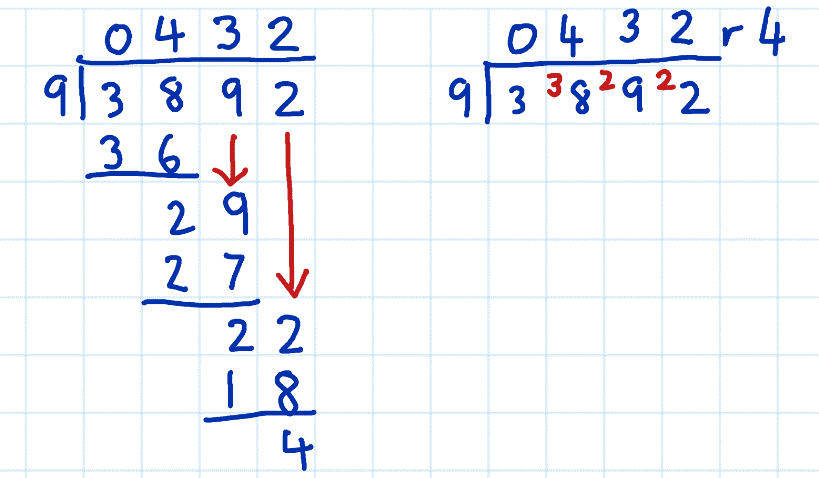
This gives us a final answer: 3892 ÷ 9 = 432 remainder 4
Short Division vs Long Division
Example 5) Work out 957.6 ÷ 4
In this example, we will see how division works in long division and short division with decimal numbers.
Long Division
Short Division

Stage 1)
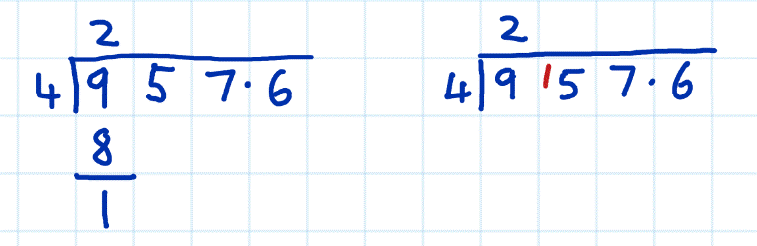
First step is to work out 9 ÷ 4, which means we need to find how many groups of 4 make 9.
There are 2 groups of 4 which make 8 so we write 2 above the 9 in the answer line at the top.
We write 8 underneath the 9 and underline it.
We work out 9 − 8 = 1 and write this below the line.
Stage 1)
First step is to work out 9 ÷ 4, which means we need to find how many groups of 4 make 9.
There are 2 groups of 4 which make 8 so we write 2 above the 9 in the answer line at the top.
We work out 9 − 8 = 1 and write this remainder in small writing at the top-left of the next digit.
Stage 2)
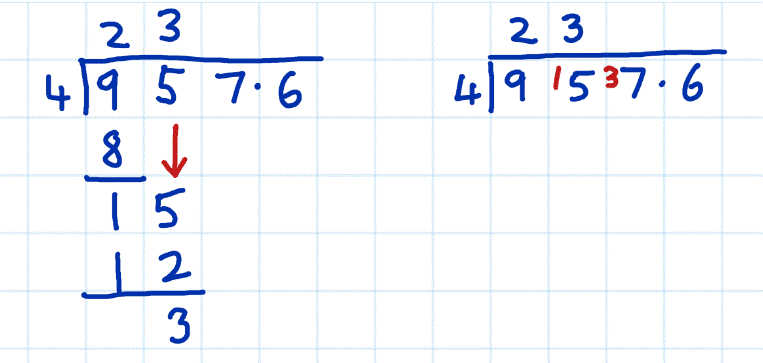
We now bring down the next digit which is a 5 and write it next to the 1 to make 15.
The next step is to work out 15 ÷ 4, which means we need to find how many groups of 4 make 15.
There are 3 groups of 4 which make 12 so we write 3 above the 5 in the answer line at the top.
We write 12 underneath the 15 and underline it.
We work out 15 − 12 = 3 and write this below the line.
Stage 2)
The next step is to work out 15 ÷ 4, which means we need to find how many groups of 4 make 15.
There are 3 groups of 4 which make 12 so we write 3 above the 5 in the answer line at the top.
We work out 15 − 12 = 3 mentally and write this at the top-left of the next digit.
Stage 3)
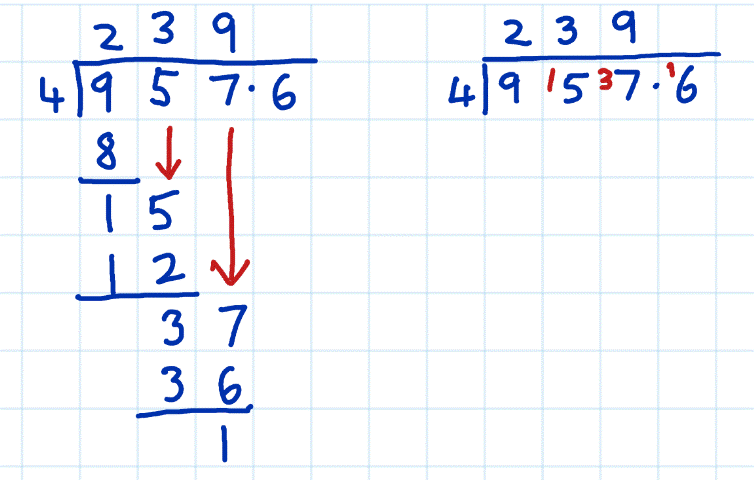
We now bring down the next digit which is a 7 and write it next to the 3 to make 37.
The next step is to work out 37 ÷ 4, which means we need to find how many groups of 4 make 37.
There are 9 groups of 4 which make 36 so we write 9 above the 7 in the answer line at the top.
We write 36 underneath the 37 and underline it.
We work out 37 − 36 = 1 and write this below the line.
Stage 3)
The next step is to work out 37 ÷ 4, which means we need to find how many groups of 4 make 37.
There are 9 groups of 4 which make 36 so we write 9 above the 7 in the answer line at the top.
We work out 37 − 36 = 1 mentally and write this at the top-left of the next digit.
Stage 3)
We write a decimal point above the decimal point in 957.6 in the answer line.
We now bring down the last digit which is a 6 and write it next to the 1 to make 16.
The next step is to work out 16 ÷ 4, which means we need to find how many groups of 4 make 16.
There are 4 groups of 4 which make 16 so we write 4 above the 6 in the answer line at the top.
We write 16 underneath the 16 and underline it.
We work out 16 − 16 = 0 and write this below the line.
There are no more digits to bring down so we have finished.
Stage 3)
We write a decimal point above the decimal point in 957.6 in the answer line.
The next step is to work out 16 ÷ 4, which means we need to find how many groups of 4 make 16.
There are 4 groups of 4 which make 16 so we write 4 above the 6 in the answer line at the top.
We work out 16 − 16 = 0 mentally.
There are no more digits left and no remainder so we have finished.
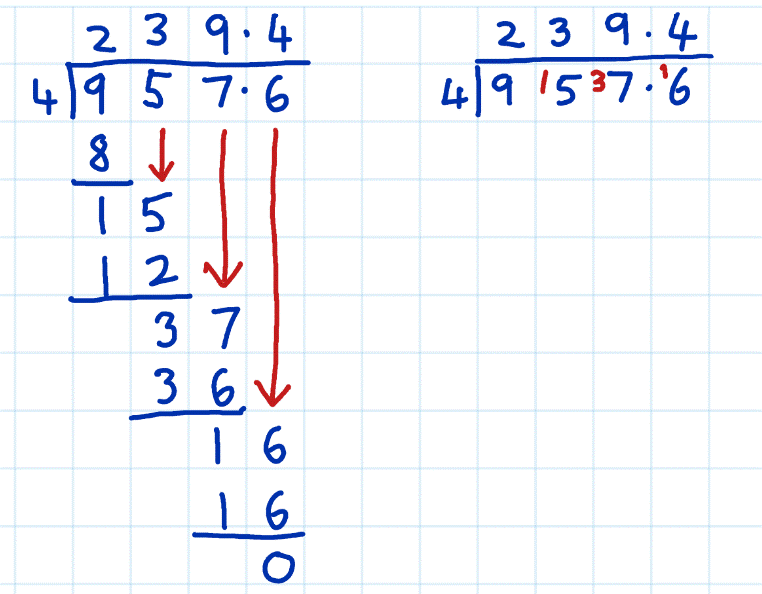
This gives us a final answer: 957.6 ÷ 4 = 239.4
Short Division vs Long Division
Example 6) Work out 827 ÷ 12
In this example, we will see how long and short division work with a two-digit divisor.
Long Division
Short Division

Stage 1)
First step is to work out 8 ÷ 12, which means we need to find how many groups of 12 make 8.
There are 0 groups of 12 which make 8 so we write 0 above the 8 in the answer line at the top.
Stage 1)
First step is to work out 8 ÷ 12, which means we need to find how many groups of 12 make 8.
There are 0 groups of 12 which make 8 so we write 0 above the 8 in the answer line at the top.
We carry the remainder, which is 8, over to the next number and write it at the top-left of the next digit along.

Stage 2)
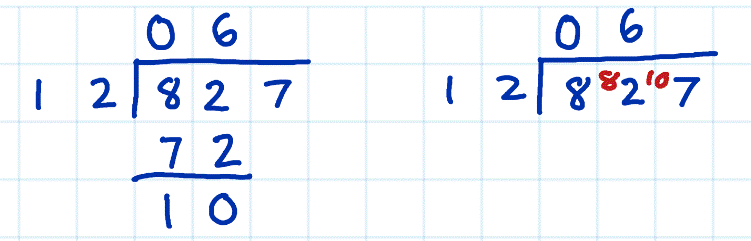
The next step is to work out 82 ÷ 12, which means we need to find how many groups of 12 make 82.
There are 6 groups of 12 which make 72 so we write 6 above the 2 in the answer line at the top.
We write 72 underneath the 82 and underline it.
We work out 82 − 72 = 10 and write this below the line.
Stage 2)
The next step is to work out 82 ÷ 12, which means we need to find how many groups of 12 make 82.
There are 6 groups of 12 which make 72 so we write 6 above the 2 in the answer line at the top.
We work out 82 − 72 = 10 mentally and write this remainder at the top-left corner of the next digit along.
Stage 3)
We move down the last digit which is a 7 next to the 10 to make 107.
The next step is to work out 107 ÷ 12, which means we need to find how many groups of 12 make 107.
There are 8 groups of 12 which make 96 so we write 8 above the 7 in the answer line at the top.
We write 96 underneath the 107 and underline it.
We work out 107 − 96 = 11 and write this below the line.
There are no more numbers to bring down so we have finished.
Stage 3)
The next step is to work out 107 ÷ 12, which means we need to find how many groups of 12 make 107.
There are 8 groups of 12 which make 96 so we write 8 above the 7 in the answer line at the top.
We work out 107 − 96 = 11 mentally.
There are no more digits to divide, so we have a remainder of 11.
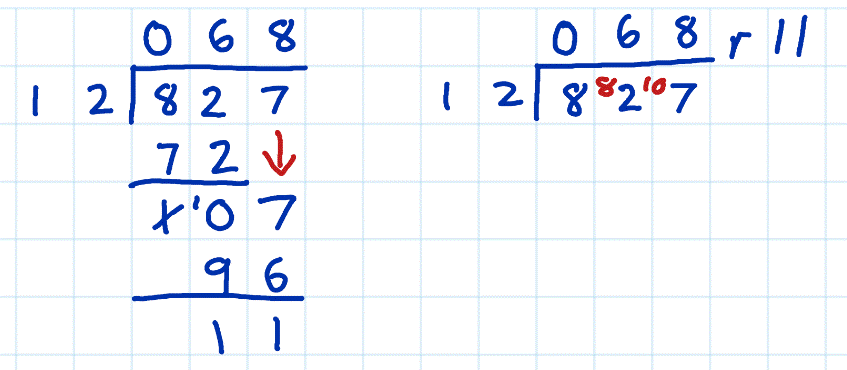
This gives us a final answer: 827 ÷ 12 = 68 remainder 11
Short Division vs Long Division
Example 7) Work out 4178 ÷ 23
In this example, we will see how long and short division work with a larger two-digit divisor.
Long Division
Short Division

Stage 1)
First step is to work out 4 ÷ 23, which means we need to find how many groups of 23 make 4.
There are 0 groups of 23 which make 4 so we write 0 above the 4 in the answer line at the top.
Stage 1)
First step is to work out 4 ÷ 23, which means we need to find how many groups of 23 make 4.
There are 0 groups of 23 which make 4 so we write 0 above the 4 in the answer line at the top.
We carry the remainder, which is 4, over to the next number and write it at the top-left of the next digit along.

Stage 2)
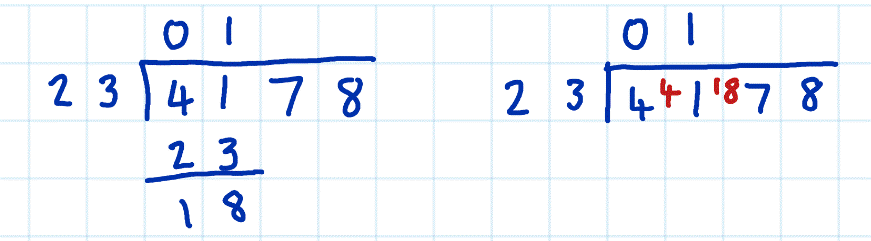
The next step is to work out 41 ÷ 23, which means we need to find how many groups of 23 make 41.
There is 1 group of 23 which make 23 so we write 1 above the 1 in the answer line at the top.
We write 23 underneath the 41 and underline it.
We work out 41 − 23 = 18 and write this below the line.
Stage 2)
The next step is to work out 41 ÷ 23, which means we need to find how many groups of 23 make 41.
There is 1 group of 23 which make 23 so we write 1 above the 1 in the answer line at the top.
We work out 41 − 23 = 18 mentally and write this at the top left corner of the next digit.
Stage 3)
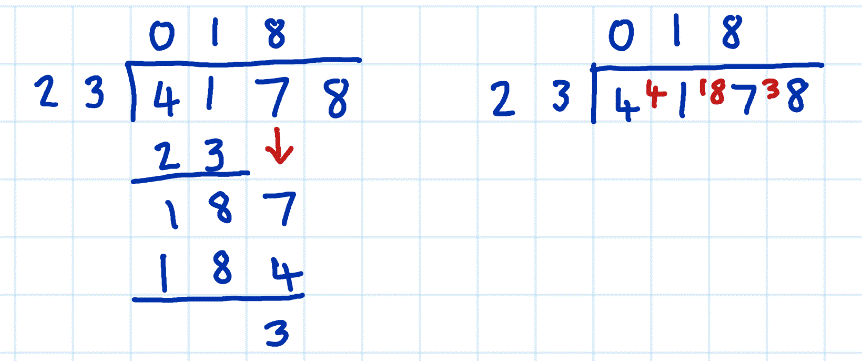
We bring down the next digit which is 7 and write it next to the 18 we have already giving us 187.
The next step is to work out 187 ÷ 23, which means we need to find how many groups of 23 make 187.
There are 8 group of 23 which make 184 so we write 8 above the 7 in the answer line at the top.
We write 184 underneath the 187 and underline it.
We work out 187 − 184 = 3 and write this below the line.
Stage 3)
The next step is to work out 187 ÷ 23, which means we need to find how many groups of 23 make 187.
There are 8 group of 23 which make 184 so we write 8 above the 7 in the answer line at the top.
We work out 187 − 184 = 3 mentally and write this at the top left corner of the next digit.
Stage 4)
We bring down the last digit which is 8 and write it next to the 3 we have already giving us 38.
The next step is to work out 38 ÷ 23, which means we need to find how many groups of 23 make 38.
There is 1 group of 23 which make 23 so we write 1 above the 8 in the answer line at the top.
We write 23 underneath the 38 and underline it.
We work out 38 − 23 = 15 and write this below the line.
There are no more numbers to bring down so we have finished.
Stage 4)
The next step is to work out 38 ÷ 23, which means we need to find how many groups of 23 make 38.
There is 1 group of 23 which make 23 so we write 1 above the 8 in the answer line at the top.
We work out 38 − 23 = 15 mentally.
There are no more digits to divide so we write 15 as a remainder.
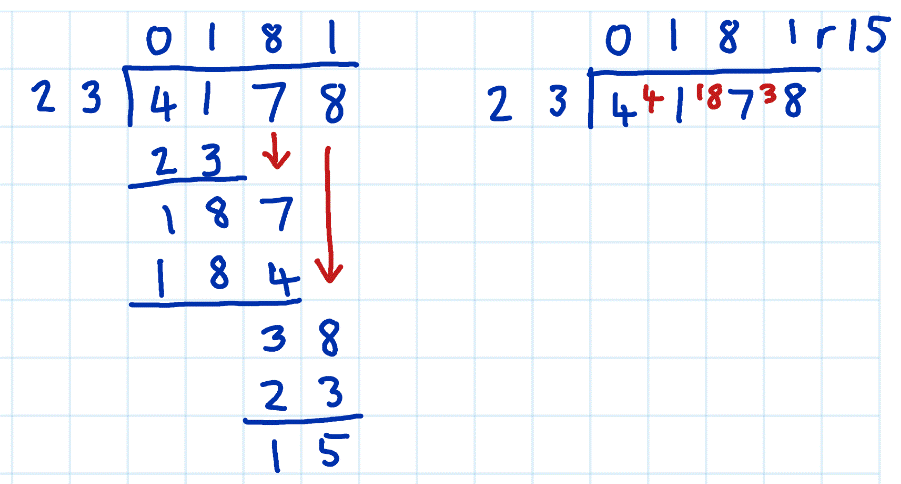
This gives us a final answer: 4178 ÷ 23 = 181 remainder 15
Review of Short Division vs Long Division
Hopefully you can now see the similarities and differences between the two methods of long and short division.
When you are doing short division, you are basically missing out the recording of the multiplication and the subtraction and doing it in your head.
You can also see just how much more compact short division is than long division.
The method you choose to do will be a matter of personal preference.
If you are fairly confident using both methods, here is my advice about when to use each:
When to use short division
- you are dividing by a single digit or a whole number up to 12
- you have a good working memory for numbers and can store results in your head
- you are confident multiplying and subtracting in your head
- you are able to organise your work neatly and clearly
- if you prefer a faster more compact way of working
When to use long division
- you are dividing by a two-digit number (or larger)
- you prefer to record all the steps as you go
- you are not very confident subtracting in your head
- you find it hard to remember numbers
- you are not confident using short division
Short Division vs Long Division Worksheets
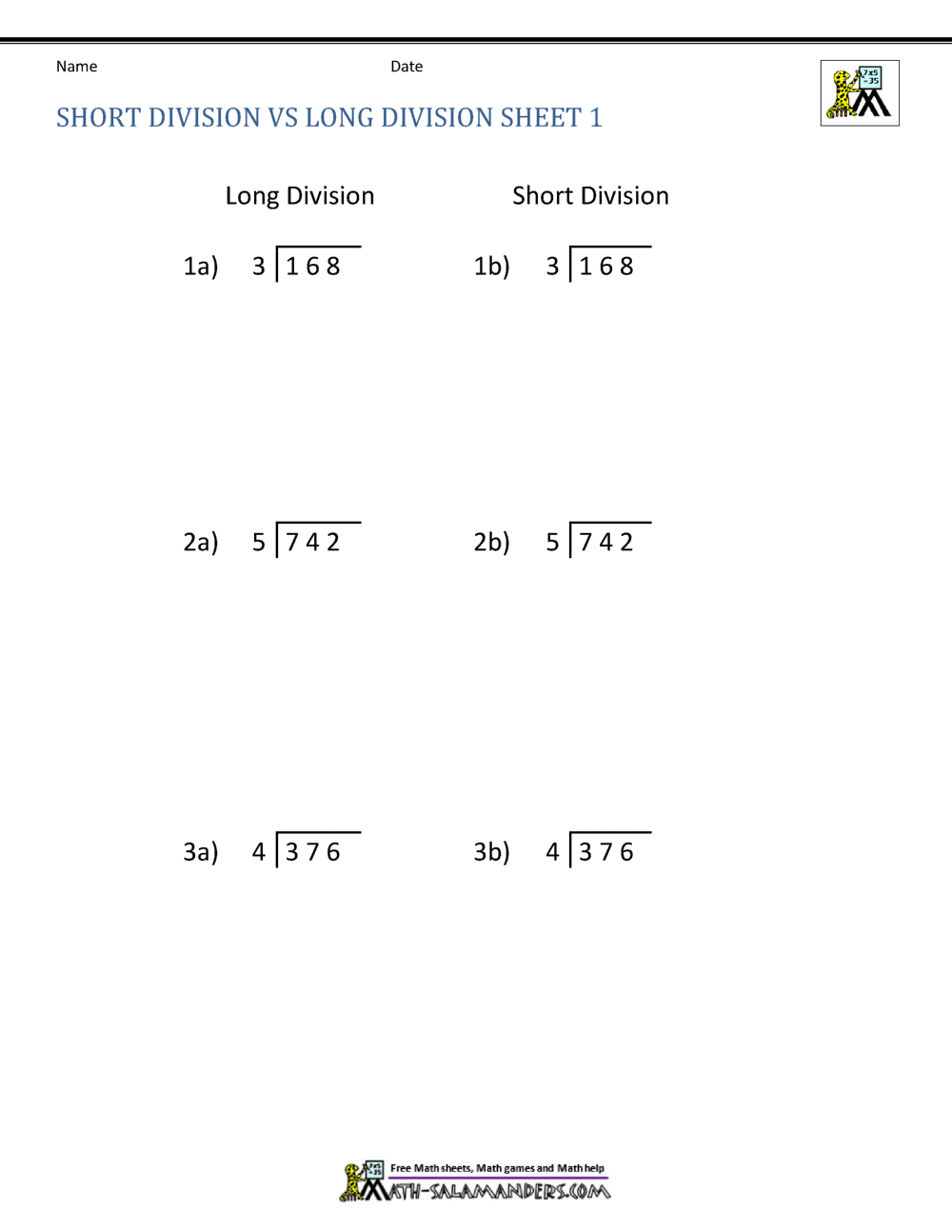
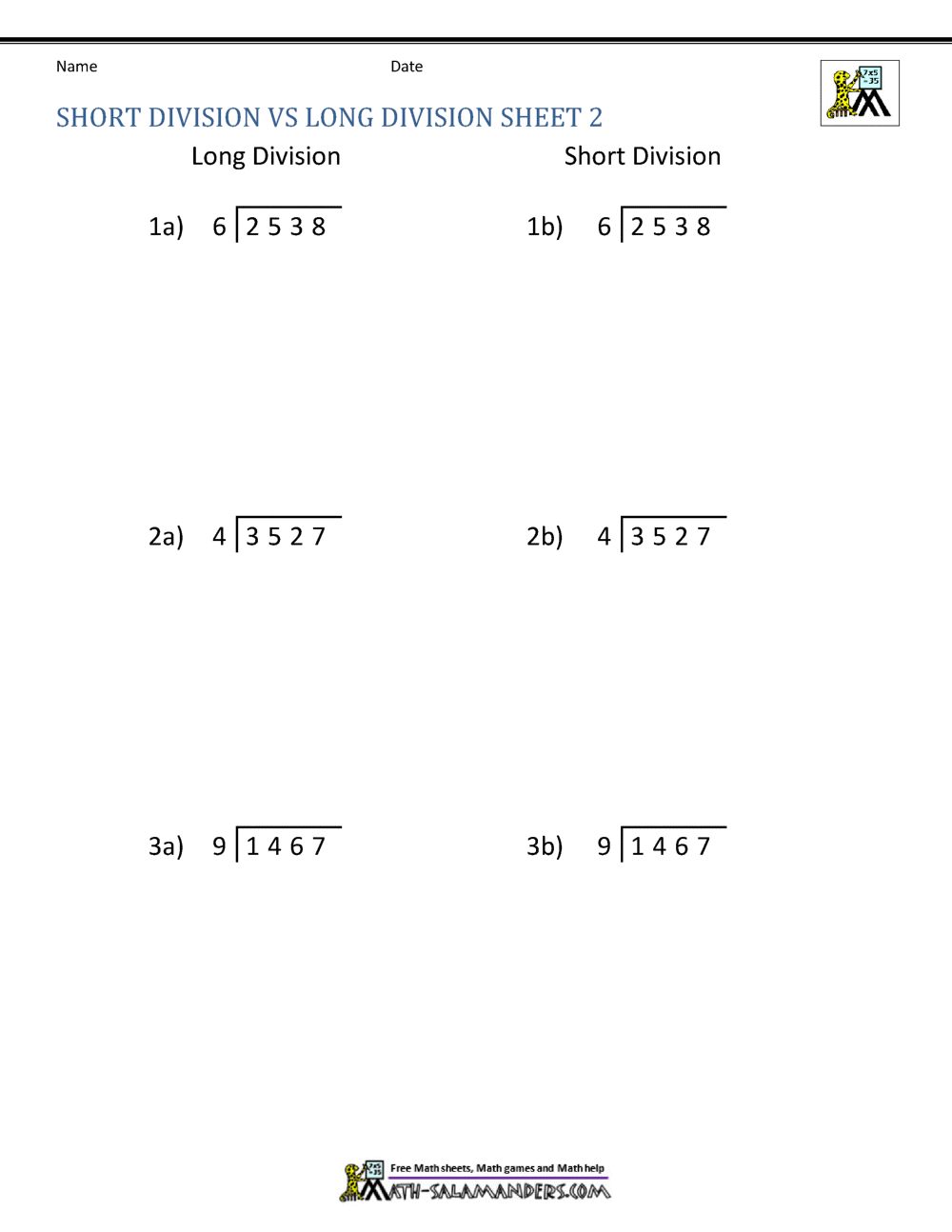
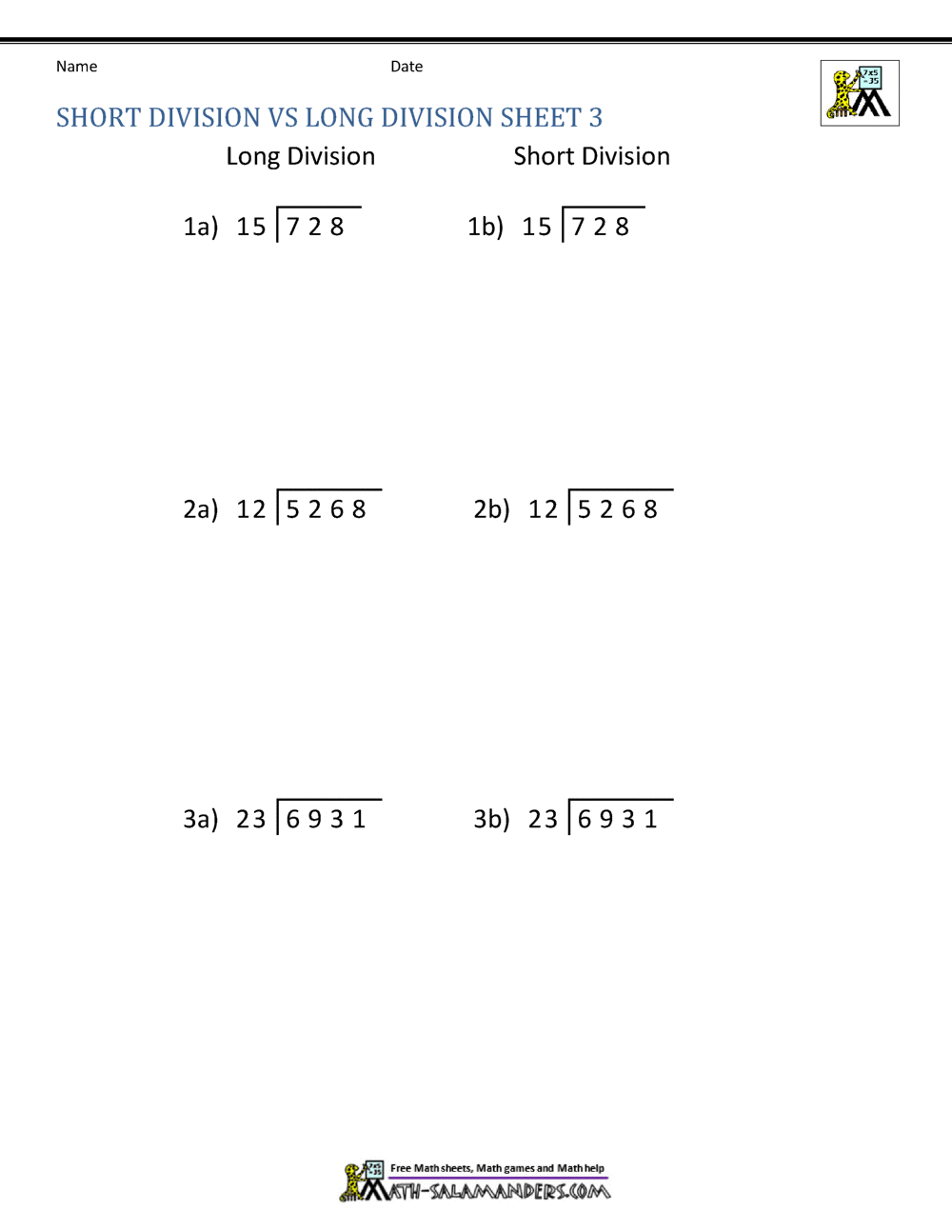
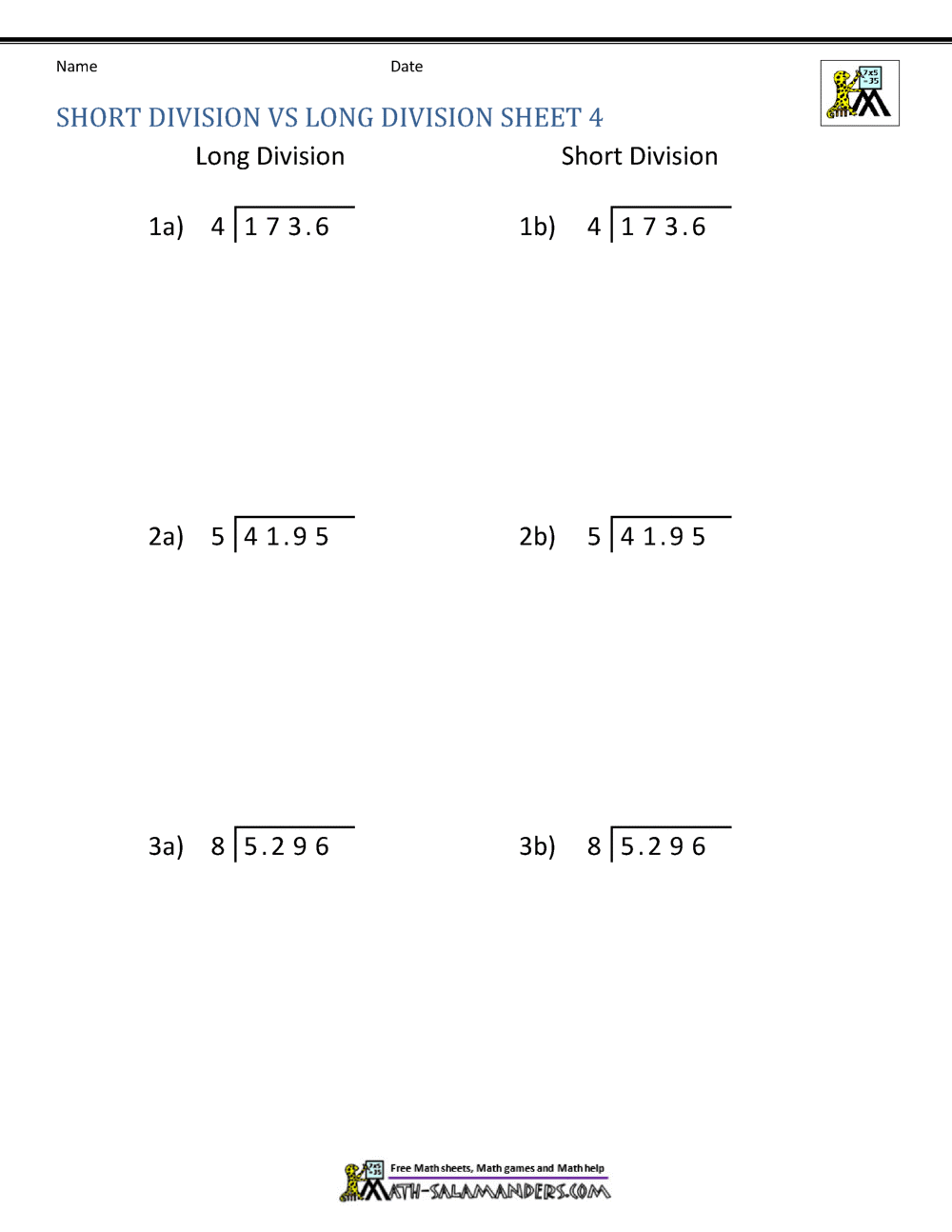
We have designed a set of worksheets to practice the same division calculations using both long and short division.
Sheet 1 involves dividing 3-digit numbers by a single digit.
Sheet 2 involves dividing 4-digit numbers by a single digit
Sheet 3 involves dividing 3- and 4-digit numbers by two-digit numbers
Sheet 4 involves divisiding decimals with up to 3 decimal places by a single digit.
More Recommended Math Worksheets
Take a look at some more of our worksheets similar to these.
Long Division Support
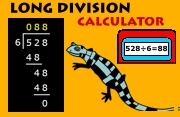
We have created a calculator to help you master the long division method.
Just type in the dividend and divisor and let the calculator show you how to work out the long division, step-by-step.
The calculator also gives commentary to show you what is happending at each stage.
Randomly Generated Long Division Problems Worksheet Generator
Take a look at our long division problems worksheet generator.
This generator will generate your own worksheets from 2-digits by 1-digit to 5-digits by 2-digits.
You can choose to have remainders or not, and whether to record the remainders as a whole number or fraction.


Graded Long Division Worksheets
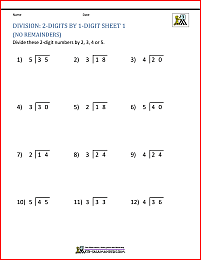
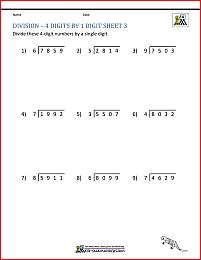
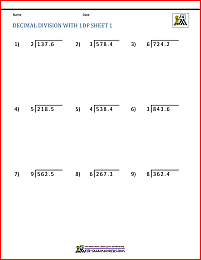
We have a range of printable long division worksheets.
Below are some links to our long division worksheets which are carefully graded and created individually.
Using these sheets will help your child to:
- divide by a range of numbers, including decimals;
- use their division fact knowledge to work out related division facts.
How to Print or Save these sheets 🖶
Need help with printing or saving?
Follow these 3 steps to get your worksheets printed perfectly!
How to Print or Save these sheets 🖶
Need help with printing or saving?
Follow these 3 steps to get your worksheets printed perfectly!
Subscribe to Math Salamanders News
Sign up for our newsletter to get free math support delivered to your inbox each month. Plus, get a seasonal math grab pack included for free!

Math-Salamanders.com
The Math Salamanders hope you enjoy using these free printable Math worksheets and all our other Math games and resources.
If you have any questions or need any information about our site, please get in touch with us using the 'Contact Us' tab at the top and bottom of every page.
